Micah Xavier Johnson (July 2, 1991 – July 8, 2016) was an American Army reserve Afghan war veteran, black nationalist, and mass murderer who perpetrated the 2016 shooting of Dallas police officers during a Black Lives Matter protest. He ambushed and killed five officers and wounded eleven others in Downtown, Dallas, Texas. He was killed by police during a standoff after expressing anger over police killings of black men. The shootings were the second-deadliest targeted attack on law enforcement officers in U.S. history, surpassed only by the September 11 attacks. == Early life == Micah Xavier Johnson was born in Magee, Mississippi, on July 2, 1991, and he was raised in Mesquite, Texas. When he was four years old, his parents divorced. At 17, Johnson enrolled at John Horn High School, where he joined the Junior Reserve Officers' Training Corps, as reported by the Mesquite Independent school district. He faced academic challenges, graduating in 2009 with a 1.98 GPA and ranking 430th out of 453 students in his class. In Spring 2011, Johnson registered for four courses at Richland college but did not complete any. Evidence suggests his enrollment at Richland gave him access to El Centro College, due to his pre-planned and coordinated movements throughout Building B during his standoff with police in 2016. == Military service == === Enlistment and early service === Micah Xavier Johnson enlisted in the U.S. Army Reserve in March 2009 at the age of 18, shortly after graduating high school in Mesquite, Texas. His initial service was primarily stateside, where he trained as a carpentry and masonry specialist (military occupational specialty 51B). This role involved engineering tasks such as construction and repair in support of military operations. During his reserve tenure, Johnson served part-time while living at home, and he was described by family and friends as initially idealistic about the military, even aspiring to become a police officer. === Deployment to Afghanistan === In September 2013, Johnson was activated for full-time duty and deployed to Afghanistan as part of the 420th Engineer Brigade, a unit based in Seagoville, Texas. His tour began in November 2013 and lasted approximately eight months, ending in July 2014. During this period, he performed non-combat engineering duties, though the stresses of serving in a combat zone were noted by those close to him. Associates from his service later suggested he experienced significant psychological strain, including the loss of friends and general disillusionment with military life, which contrasted with his pre-deployment enthusiasm. His mother later reflected that "the military was not what Micah thought it would be." === Sexual harassment allegation and early return === About six months into his deployment, in May 2014, Johnson faced a serious accusation of sexual harassment from a higher-ranking female soldier. She filed for a military protective order against him, prompting an investigation. As a result, his chain of command recommended an "other than honorable" discharge—the second (more severe is a dishonorable discharge, which does not require a court martial) most severe administrative separation short of a court-martial—and he was sent back to the United States ahead of schedule. Despite this, Johnson was not court-martialed, and the case did not lead to criminal charges. A military lawyer who represented him described the handling as unusual, noting that "someone really screwed up" in allowing him to avoid harsher consequences. === Post-deployment and discharge === Upon returning stateside in August 2014, Johnson resumed reserve duties with his engineering brigade until April 2015. He was honorably discharged at the rank of private first class (E-3), a relatively low junior enlisted rank after six years of service, which military sources attributed partly to the unresolved harassment allegation impacting his promotions and evaluations. Friends and family observed a marked change in his demeanor post-deployment: he became more reclusive, resentful toward the government, and withdrawn, with some speculating that the Afghanistan experience and the scandal contributed to a "small breakdown." In July 2016, following the Dallas shooting, the U.S. Army launched an internal review of his service record, including the harassment claims, to assess whether all misconduct allegations had been fully investigated. == Shootings == On July 7, 2016, a peaceful Black Lives Matter protest marched through downtown Dallas, Texas, drawing about 800 demonstrators. The event responded to the recent police killings of Alton Sterling in Baton Rouge, Louisiana, on July 5, and Philando Castile in Falcon Heights, Minnesota, on July 6—both black men shot during encounters captured on video. Around 100 officers monitored the march, which passed near El Centro College without incident until gunfire erupted around 8:45 p.m. Johnson arrived in a dark SUV, armed with an SKS semi-automatic rifle, a handgun, extra ammunition, and ballistic vests. He parked near the protest's end, chatted briefly with two officers, then opened fire on police from an elevated position on Lamar Street (now Botham Jean Boulevard). He shot from behind barriers, through windows, and while moving, targeting white officers specifically. The ambush killed five officers and wounded seven more, plus two civilians. Gunfire scattered protesters in panic as Johnson used military-style tactics, like quick position changes, to prolong the assault. === Standoff and Johnson's end === Johnson fled into El Centro College's Building C, then Building B, navigating pre-planned routes with familiarity from prior enrollment at nearby Richland College. He barricaded in a parking garage, wounding more officers in close-range fights. During two-hour negotiations, he taunted police via phone—laughing, singing, asking kill counts, and claiming planted bombs (none found). He admitted solo action, rage at White officers, and no group ties. At 2:30 a.m. on July 8, SWAT ended the standoff by detonating a bomb via remote-controlled robot in the garage, killing Johnson. This marked the first U.S. police use of such a tactic. === Victims and investigation findings === The slain officers were: Brent Thompson (Transit Authority, 36), Patrick Zamarripa (Dallas PD, 33), Michael Krol (Dallas PD, 40), Lorne Ahrens (Dallas PD, 48), and Michael Smith (Dallas PD, 55). Wounded officers included Sheik Smith, John Mitchell, and others; civilians She Tamara El-Sobky and Hillary Castro. Searches of Johnson's home revealed bomb-making materials, rifles, vests, and notes on tactics, suggesting plans for a larger attack. He had practiced explosions and honed skills post-discharge, including marksmanship. === Aftermath and impact === Dallas mourned with vigils and memorials, while national protests against police violence continued amid grief. President Barack Obama, the first African American president of the United States, called Johnson a "demented individual" and formed a task force on race and policing. The incident fueled debates on gun control, race relations, and veteran mental health—Johnson had sought VA treatment for stress and anxiety but showed no prior violent signs to friends. El Centro College canceled all classes on July 8. Police barricaded the perimeter and began canvassing the crime scene. The explosion that killed Johnson also destroyed the school's servers, further delaying reopening. The school partially reopened on July 20, with staff returning that day and students on the following day. Buildings A, B, and C remained closed pending the FBI investigation. == Motive == An investigation into his online activities uncovered his interest in black nationalist groups. The Southern Poverty Law Center (SPLC), and news outlets reported that Johnson "liked" the Facebook pages of black nationalist organizations such as the New Black Panther Party (NBPP), Nation of Islam, and Black Riders Liberation Party, three groups which are listed by the SPLC as hate groups. On Facebook, Johnson posted an angry and "disjointed" post against White people on July 2, several days before the attack. NBPP head Quanell X said after the shooting that Johnson had been a member of the NBPP's Houston chapter for about six months, several years before. Quanell X added that Johnson had been "asked to leave" the group for violating the organization's "chain of command" and espousing dangerous rhetoric, such as asking the NBPP why they had not purchased more weapons and ammunition, and expressing his desire to harm black church preachers because he believed they were more interested in money than God. Following the shooting, a national NBPP leader distanced the group from Johnson, saying that he "was not a member of" the party. Further investigation into his digital footprint showed that Johnson visited the sites of Marxist Leninist groups associated with "Revolutionary Black Nationalism",
ChatGPT
ChatGPT is a generative artificial intelligence chatbot developed by OpenAI. Originally released in November 2022, the product uses large language models—specifically generative pre-trained transformers (GPTs)—to generate text, speech, and images in response to user prompts. ChatGPT accelerated the AI boom, an ongoing period marked by rapid investment and public attention toward the field of artificial intelligence (AI). OpenAI operates the service on a freemium model. Users can interact with ChatGPT through text, audio, and image prompts. ChatGPT was quickly adopted, reaching 100 million monthly active users two months after its release and 900 million weekly active users in February 2026. It has been lauded for its potential to transform numerous professional fields, and has instigated public debate about the nature of creativity and the future of knowledge work. The chatbot has also been criticized for its limitations and potential for unethical use. It can generate plausible-sounding but incorrect or nonsensical answers, known as hallucinations. Biases in its training data have been reflected in its responses. The chatbot can facilitate academic dishonesty, generate misinformation, and create malicious code. The ethics of its development, particularly the use of copyrighted content as training data, have also drawn controversy. == Features == ChatGPT is a chatbot and AI assistant built on large language model (LLM) technology. It is designed to generate human-like text and can carry out a wide variety of tasks. These include, among many others, writing and debugging computer programs, composing music, scripts, fairy tales, and essays, answering questions (sometimes at a level exceeding that of an average human test-taker), and generating business concepts. ChatGPT is frequently used for translation and summarization tasks, and can simulate interactive environments such as a Linux terminal, a multi-user chat room, or simple text-based games such as tic-tac-toe. Users interact with ChatGPT through conversations which consist of text, audio, and image inputs and outputs. The user's inputs to these conversations are referred to as prompts. An optional "Memory" feature allows users to tell ChatGPT to memorize specific information. Another option allows ChatGPT to recall old conversations. GPT-based moderation classifiers are used to reduce the risk of harmful outputs being presented to users. In March 2023, OpenAI added support for plugins for ChatGPT. This includes both plugins made by OpenAI, such as web browsing and code interpretation, and external plugins from developers such as Expedia, OpenTable, and Zapier. From October to December 2024, ChatGPT Search was deployed. It allows ChatGPT to search the web in an attempt to make more accurate and up-to-date responses. It increased OpenAI's direct competition with major search engines. OpenAI allows businesses to tailor how their content appears in the ChatGPT Search results and influence what sources are used. In December 2024, OpenAI launched a new feature allowing users to call ChatGPT with a telephone for up to 15 minutes per month for free. In September 2025, OpenAI added a feature called Pulse, which generates a daily analysis of a user's chats and connected apps such as Gmail and Google Calendar. In October 2025, OpenAI launched ChatGPT Atlas, a browser integrating the ChatGPT assistant directly into web navigation, to compete with existing browsers such as Google Chrome. It has an additional feature called "agentic mode" that allows it to take online actions for the user. === Paid tier === ChatGPT was initially free to the public and remains free in a limited capacity. In February 2023, OpenAI launched a premium service, ChatGPT Plus, that costs US$20 per month. What was offered on the paid plan versus the free tier changed as OpenAI has continued to update ChatGPT, and a Pro tier at $200/mo was introduced in December 2024. The Pro launch coincided with the release of the o1 model. In August 2025, ChatGPT Go was offered in India for ₹399 per month. The plan has higher limits than the free version. === Mobile apps === In May-July 2023, OpenAI began offering ChatGPT iOS and Android apps. ChatGPT can also power Android's assistant. An app for Windows launched on the Microsoft Store on October 15, 2024. === Languages === OpenAI met Icelandic President Guðni Th. Jóhannesson in 2022. In 2023, OpenAI worked with a team of 40 Icelandic volunteers to fine-tune ChatGPT's Icelandic conversation skills as a part of Iceland's attempts to preserve the Icelandic language. ChatGPT (based on GPT-4) was better able to translate Japanese to English when compared to Bing, Bard, and DeepL Translator in 2023. In December 2023, the Albanian government decided to use ChatGPT for the rapid translation of European Union documents and the analysis of required changes needed for Albania's accession to the EU. Several studies have shown that ChatGPT can outperform Google Translate in some mainstream translation tasks. However, as of 2024, no machine translation services match human expert performance. In August 2024, a representative of the Asia Pacific wing of OpenAI made a visit to Taiwan, during which a demonstration of ChatGPT's Chinese abilities was made. ChatGPT's Mandarin Chinese abilities were lauded, but the ability of the AI to produce content in Mandarin Chinese in a Taiwanese accent was found to be "less than ideal" due to differences between mainland Mandarin Chinese and Taiwanese Mandarin. === GPT Store === In November 2023, OpenAI released GPT Builder, a tool allowing users to customize ChatGPT's behavior for a specific use case. The customized systems are referred to as GPTs. In January 2024, OpenAI launched the GPT Store, a marketplace for GPTs. At launch, OpenAI included more than 3 million GPTs created by GPT Builder users in the GPT Store. === ChatGPT Apps === In September 2025, OpenAI added support for Model Context Protocol (MCP) to ChatGPT apps. When enabled in developer mode, this allows for improved third-party access to ChatGPT tools and servers. === Deep Research === In February 2025, OpenAI released Deep Research, a feature that generates reports based on extensive web searches. It was initially based on the reasoning model o3 and took 5 to 30 minutes per report. === Images === In October 2023, OpenAI's image generation model DALL-E 3 was integrated into ChatGPT. The integration used ChatGPT to write prompts for DALL-E guided by conversations with users. In March 2025, OpenAI updated ChatGPT to generate images using GPT Image instead of DALL-E. One of the most significant improvements was in the generation of text within images, which is especially useful for branded content. However, this ability is noticeably worse in non-Latin alphabets. The model can also generate new images based on existing ones provided in the prompt. These images are generated with C2PA metadata, which can be used to verify that they are AI-generated. OpenAI has emplaced additional safeguards to prevent what the company deems to be harmful image generation. === Agents === In 2025, OpenAI added several features to make ChatGPT more agentic (capable of autonomously performing longer tasks). In January, Operator was released. It was capable of autonomously performing tasks through web browser interactions, including filling forms, placing online orders, scheduling appointments, and other browser-based tasks. It was controlling a software environment inside a virtual machine with limited internet connectivity and with safety restrictions. It struggled with complex user interfaces. In May 2025, OpenAI introduced an agent for coding named Codex. It is capable of writing software, answering codebase questions, running tests, and proposing pull requests. It is based on a fine-tuned version of OpenAI o3. It has two versions, one running in a virtual machine in the cloud, and one where the agent runs in the cloud, but performs actions on a local machine connected via API. In July 2025, OpenAI released ChatGPT agent, an AI agent that can perform multi-step tasks. Like Operator, it controls a virtual computer. It also inherits from Deep Research's ability to gather and summarize significant volumes of information. The user can interrupt tasks or provide additional instructions as needed. In September 2025, OpenAI partnered with Stripe, Inc. to release Agentic Commerce Protocol, enabling purchases through ChatGPT. At launch, the feature was limited to purchases on Etsy from US users with a payment method linked to their OpenAI account. OpenAI takes an undisclosed cut from the merchant's payment. === ChatGPT Health === On January 7, 2026, OpenAI introduced a feature called "ChatGPT Health", whereby ChatGPT can discuss the user's health in a way that is separate from other chats. The feature is not available for users in the United Kingdom, Switzerland, or the European Economic Area, and is available on a waitli
CloudMinds
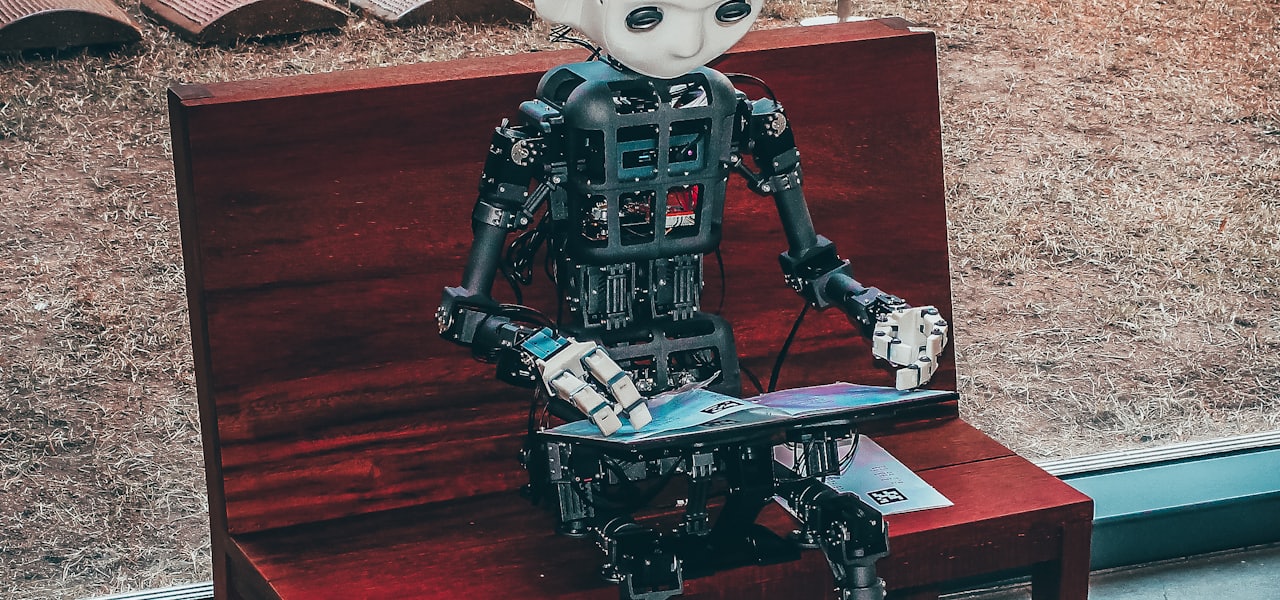
CloudMinds is an operator of cloud-based systems for cognitive robotics. == History == CloudMinds was founded in 2015 and is backed by SoftBank, Foxconn, Walden Venture Investments, and Keytone Ventures. CloudMinds has developed research in smart devices, robot control, high-speed security networks, and cloud intelligence integration. CloudMinds developed the Mobile Intranet Cloud Services (MCS) based on these technologies in order to increase the information security of the cloud robot remote control. The technology has been applied in the fields of finance, medicine, the military, public safety, and large-scale manufacturing. == U.S. sanctions == In May 2020, CloudMinds was added to the Bureau of Industry and Security's Entity List due to U.S. national security concerns.
Wrike
Wrike, Inc. is an American project management application service provider based in San Jose, California. Wrike also has offices in India, Dallas, Tallinn, Nicosia, Dublin, Tokyo, Melbourne, and Prague. == History == Wrike was founded in 2006 by Andrew Filev. Currently CEO at Wrike is Thomas Scott. Filev initially self-funded the company before later obtaining investor funding. Wrike released the beta version of its software (also called Wrike) in December 2006. The company then launched a new "Enterprise" platform in December 2013. In June 2015, Wrike announced the opening of an office in Dublin, Ireland and in 2016, Wrike launched a datacenter there to host data in compliance with local privacy regulations. In July 2016, Wrike announced the launch of Wrike for Marketers. That same year, Wrike's headquarters moved from Mountain View to San Jose, California. In January 2021, Citrix Systems announced its intention to acquire Wrike for $2.25 billion. The acquisition closed in March 2021. On January 31, 2022, it was announced that Citrix had been acquired in a $16.5 billion deal by affiliates of Vista Equity Partners and Evergreen Coast Capital. Citrix would merge with TIBCO Software, a Vista portfolio company to form Cloud Software Group (CSG). In September 2022, Wrike separated from Citrix Systems. In July 2023, Vista transferred ownership to Symphony Technology Group. == Investments == Wrike received $1 million in Angel funding in 2012 from TMT Investments. In October, 2013, Wrike secured $10 million in investment funding from Bain Capital. In May 2015, the company secured $15 million in a new round of funding. Investors included Scale Venture Partners, DCM Ventures, and Bain Capital. At that time, Wrike had 8,000 customers, 200 employees, and 30,000 new users each month. On November 29, 2018, Wrike signed a definitive agreement to receive a majority investment by Vista Equity Partners (“Vista”), a firm focused on software, data and technology-enabled businesses. == Software == The Wrike project management software is a Software-as-a-Service (SaaS) product with tools for managing projects, deadlines, schedules, and workflow processes. It includes collaboration features. The application is available in English, French, Spanish, German, Portuguese, Italian, Japanese and Russian. Wrike has triggers for task automation in workflow management. === Features === Wrike features a multi-pane UI and consists of features in two categories: project management, and team collaboration. According to Wrike, project management features are designed to help teams track dates and dependencies associated with projects, manage assignments and resources, and track time. These include an interactive Gantt chart, a workload view, and a sortable table that can be customized to store project data. The software includes a co-editing tool, discussion threads on tasks, and tools for attaching documents, editing them, and tracking their changes. Wrike uses an "inbox" feature and browser notifications to alert users of updates from their colleagues and dashboards for quick overviews of pending tasks. These updates are also available in Wrike's mobile apps on iOS and Android. Wrike has an optional feature set called "Wrike for Marketers" which has several tools for managing marketing workflows. In May 2012, Wrike announced the launch of a freemium version of its software for teams of up to 5 users. That year also saw the integration of a live text coeditor into its workspace to unify collaboration and task management. In late 2013 Wrike released a new feature set called Wrike Enterprise which included advanced analytics and other tools targeted at large business customers. Since then it has released several major updates to Wrike Enterprise, including a customizable spreadsheet called "Dynamic Platform" in late 2014 and custom workflows for teams in 2015. In July 2016, Wrike was updated with a set of add-on features under the name "Wrike for Marketers," which includes integrations with Adobe Photoshop, a tool for submitting requests, and proofing and approval tools for creative assets like videos and images. Wrike is available as native Android and iOS apps. Mobile apps include an interactive Gantt chart that syncs across devices. The apps are available offline, and sync when connection is restored. === Criticism === Critics said new users may have a learning curve with complex features. Wrike has 2,710 customers for an estimated 0.04% market share. Competitors include Google Workspace, Slack (software), and Quip (software).
Twproject
Twproject (say: T W Project) is a web-based project and groupware management tool created by Open Lab, an Italian software house founded in 2001. It won the 17th Jolt Productivity Award in 2007 in the project management category. In March 2019 it becomes property of Twproject company. It has widespread use in universities as a teaching tool in project management courses. It is used by Oracle Corporation, Prada, Calzedonia, General Electric and many other companies from corporations to small start-ups. == History == April 2001 - The idea of Teamwork came to Open-Lab founders from a need to overcome the PM tools used at that time. It was built in Microsoft ASP and Adobe Flash November 2002 - Open-Lab decide to move from Flash to HTML and from ASP to Java-JSP. Teamwork 2 development is started. June 2004 - Teamwork 2 released, using top open-source technologies like Hibernate, jBlooming, dynamic CSS, Ajax 7 January 2005 - Teamwork goes open source, under LGPL license; remains such until June 2006 (18 months): it is a hit application on SourceForge, with 38.000 downloads, covered by greeting but starving April 2005 - Open-Lab takes the decision to change commercial strategy to finance development of Teamwork version 3 6 June 2006 - Teamwork 3 is finally out (15 months development). New interface, many new features, agile support and much more 27 March 2007 - Teamwork wins the 2007 JOLT Productivity Awards for project management category July 2007 - Teamwork 4 development started: new interface, extended use of new HTML capabilities, JS-oriented interface, start using jQuery February 2009 - Teamwork 4.0 is out February 2010 - Teamwork 4.4: public project pages, Chinese interface. jQuery is getting more space in Teamwork December 2010 - Teamwork 4.6: released Mobile module available for iPhone, Android, BlackBerry. Intensive usage of jQuery June 2011 - Teamwork 4.7: released Issue Kanban / Organizer January 2012 - Teamwork 5.0 development started. Lighter interface, extensive usage of dynamic pages, easier installer and first time approach. Learning curve highly reduced. A jQuery Gantt editor included and released free for the community July 2012 - Teamwork 5 released and also the free online Gantt editor November 2012 - Teamwork 5.1 with new trees and improved model for staffing March 2013 - Teamwork 5.2 with stronger support for customizations and Japanese interface. April 2014 - Teamwork has changed its name in Twproject because the domain teamwork.com has been purchased by Teamwork. April 2013 - Twproject 5.4 with a redesigned more powerful Gantt chart. August 2015 - Twproject 5 finale release. September 2015 - Twproject 6 with a completely redesigned user interface. March 2019 - A new company Twproject srl has been spun off. September 2021 - Twproject 7 has been released introducing WBS based management and workload management. == Features == Project & task management (with Microsoft Project import/export), and JSON format Gantt editor. Uses jQuery Gantt components Time tracking. Several entry points: dashboard, weekly view, issues, start/stop buttons Resource planning with weekly/monthly view, work load overview, unavailability from agenda Issue tracking & planning(with Kanban), e-mail integration, task dedicated inboxes Dashboard configuration, with customizable portlets and layout Message boards Scrum module Meeting and minute management, attached documents Agenda (Integrates with iCal, Microsoft Outlook, Microsoft Entourage, and Google Calendar) Document management, remote file systems link with NTFS, FTP, SVN, S3 (Dropbox, Google drive) Mobile application for iPhone, iPad, Android, Blackberry, Windows phone == Integration == A complete JSON API is available for integrations. The applications runs in Java JDK 8+ on the Hibernate object/relational mapping. The standard distribution uses Apache Tomcat 9, but can run on any J2EE application server. Twproject is tested on these DB servers: MySQL, Oracle, SQL Server, PostgreSql, HSQLDB, but as uses Hibernate can run on many others. There is simple graphical step-by-step installer for Windows, Mac, Linux, .zip/.tar.gz/.rpm packages.
Visual descriptor
In computer vision, visual descriptors or image descriptors are descriptions of the visual features of the contents in images, videos, or algorithms or applications that produce such descriptions. They describe elementary characteristics such as the shape, the color, the texture or the motion, among others. == Introduction == As a result of the new communication technologies and the massive use of Internet in our society, the amount of audio-visual information available in digital format is increasing considerably. Therefore, it has been necessary to design some systems that allow us to describe the content of several types of multimedia information in order to search and classify them. The audio-visual descriptors are in charge of the contents description. These descriptors have a good knowledge of the objects and events found in a video, image or audio and they allow the quick and efficient searches of the audio-visual content. This system can be compared to the search engines for textual contents. Although it is relatively easy to find text with a computer, it is much more difficult to find concrete audio and video parts. For instance, imagine somebody searching a scene of a happy person. The happiness is a feeling and it is not evident its shape, color and texture description in images. The description of the audio-visual content is not a superficial task and it is essential for the effective use of this type of archives. The standardization system that deals with audio-visual descriptors is the MPEG-7 (Motion Picture Expert Group - 7). == Types == Descriptors are the first step to find out the connection between pixels contained in a digital image and what humans recall after having observed an image or a group of images after some minutes. Visual descriptors are divided in two main groups: General information descriptors: contain low level descriptors which give a description about color, shape, regions, textures and motion. Specific domain information descriptors: give information about objects and events in the scene. A concrete example would be face recognition. === General information descriptors === General information descriptors consist of a set of descriptors that covers different basic and elementary features like: color, texture, shape, motion, location and others. This description is automatically generated by means of signal processing. ==== Color ==== It's the most basic quality of visual content. Five tools are defined to describe color. The three first tools represent the color distribution and the last ones describe the color relation between sequences or group of images: Dominant color descriptor (DCD) Scalable color descriptor (SCD) Color structure descriptor (CSD) Color layout descriptor (CLD) Group of frame (GoF) or group-of-pictures (GoP) ==== Texture ==== It's an important quality in order to describe an image. The texture descriptors characterize image textures or regions. They observe the region homogeneity and the histograms of these region borders. The set of descriptors is formed by: Homogeneous texture descriptor (HTD) Texture browsing descriptor (TBD) Edge histogram descriptor (EHD) ==== Shape ==== It contains important semantic information due to human's ability to recognize objects through their shape. However, this information can only be extracted by means of a segmentation similar to the one that the human visual system implements. Nowadays, such a segmentation system is not available yet, however there exists a serial of algorithms which are considered to be a good approximation. These descriptors describe regions, contours and shapes for 2D images and for 3D volumes. The shape descriptors are the following ones: Region-based shape descriptor (RSD) Contour-based shape descriptor (CSD) 3-D shape descriptor (3-D SD) ==== Motion ==== It's defined by four different descriptors which describe motion in video sequence. Motion is related to the objects motion in the sequence and to the camera motion. This last information is provided by the capture device, whereas the rest is implemented by means of image processing. The descriptor set is the following one: Motion activity descriptor (MAD) Camera motion descriptor (CMD) Motion trajectory descriptor (MTD) Warping and parametric motion descriptor (WMD and PMD) ==== Location ==== Elements location in the image is used to describe elements in the spatial domain. In addition, elements can also be located in the temporal domain: Region locator descriptor (RLD) Spatio temporal locator descriptor (STLD) === Specific domain information descriptors === These descriptors, which give information about objects and events in the scene, are not easily extractable, even more when the extraction is to be automatically done. Nevertheless, they can be manually processed. As mentioned before, face recognition is a concrete example of an application that tries to automatically obtain this information. == Descriptors applications == Among all applications, the most important ones are: Multimedia documents search engines and classifiers. Digital library: visual descriptors allow a very detailed and concrete search of any video or image by means of different search parameters. For instance, the search of films where a known actor appears, the search of videos containing the Everest mountain, etc. Personalized electronic news service. Possibility of an automatic connection to a TV channel broadcasting a soccer match, for example, whenever a player approaches the goal area. Control and filtering of concrete audiovisual content, like violent or pornographic material. Also, authorization for some multimedia content.
1DayLater
1DayLater was a free, web-based software that was focused on professional invoicing. The company was formed in 2009 and closed in October 2013. The main function of 1DayLater was to help users create invoices for clients. It could also be used to track time and other expenses, work to budgets, and to track projects. Multiple users could simultaneously work on the same projects together. PC Magazine (PCMag) voted 1DayLater as one of the 'Best Free Software of 2010'. == History == The software was developed by two brothers, Paul and David King; after they experienced similar frustrations while working freelance, the brothers wanted to create a product that would let them track time, expenses and business miles in a single online location. == Media coverage == 1DayLater had the following press coverage: BBC Webscape (July 2010) - Kate Russell gives her latest selection of the best sites on the World Wide Web PCMag (March 2010) - The best free software of 2010 Lifehacker (February 2010) - "A worthy addition to our 'Top Ten Tips and Tools for Freelancers'" Gigaom (February 2010) - Taking a closer look with 1DayLater The Journal (May 2009) - "Top Ten Brands of the North East" (UK) Techcrunch (January 2009) - "A 'feisty time tracking solution from the North East of England'"